If you are on the journey with us reading through the Bible, welcome to day 113 or if you are joining us now welcome and be prepared for a life changing experience! You can reach us at exploringgodslibrary@gmail.comAlso join us Tuesday nights from 6-7 pm pst on facebook live at: (copy and paste in another tab)www.facebook.com/james.stephens.5205622 If you are not on facebook, we are now on youtube athttps://youtu.be/kgw6BgzaDCg (copy and paste in another tab)- Join us!
Genealogies summarizing “the divinely selected course of redemptive history” including The Family of Adam–Seth to Abraham, the Family of Ishmael, the Family of Keturah, the Family of Isaac, the Family of Seir, and the Kings of Edom as read by Akexander Scourby.
If you are on the journey with us reading through the Bible, welcome to day 112 or if you are joining us now welcome and be prepared for a life changing experience! You can reach us at exploringgodslibrary@gmail.comAlso join us Tuesday nights from 6-7 pm pst on facebook live at: (copy and paste in another tab)www.facebook.com/james.stephens.5205622 If you are not on facebook, we are now on youtube athttps://youtu.be/kgw6BgzaDCg (copy and paste in another tab)- Join us!
If you are on the journey with us reading through the Bible, welcome to day 110 or if you are joining us now welcome and be prepared for a life changing experience! You can reach us at exploringgodslibrary@gmail.comAlso join us Tuesday nights from 6-7 pm pst on facebook live at: (copy and paste in another tab)www.facebook.com/james.stephens.5205622 If you are not on facebook, we are now on youtube athttps://youtu.be/kgw6BgzaDCg (copy and paste in another tab)- Join us!
If you are on the journey with us reading through the Bible, welcome to day 111 or if you are joining us now welcome and be prepared for a life changing experience! You can reach us at exploringgodslibrary@gmail.comAlso join us Tuesday nights from 6-7 pm pst on facebook live at: (copy and paste in another tab)www.facebook.com/james.stephens.5205622 If you are not on facebook, we are now on youtube athttps://youtu.be/kgw6BgzaDCg (copy and paste in another tab)- Join us!
If you are on the journey with us reading through the Bible, welcome to day 110 or if you are joining us now welcome and be prepared for a life changing experience! You can reach us at exploringgodslibrary@gmail.comAlso join us Tuesday nights from 6-7 pm pst on facebook live at: (copy and paste in another tab)www.facebook.com/james.stephens.5205622 If you are not on facebook, we are now on youtube athttps://youtu.be/kgw6BgzaDCg (copy and paste in another tab)- Join us!
A sermon by Dr. Martin Lloyd-Jones on the Book of Acts Chapter 17 which provides a great deal of value for seekers of our day as the Apostle Paul speaks to the men of Athens on Mars Hill where men proudly debated philosophical ideas of the day from Stoicism, much like western styled Buddhism and Epicurianism, religious materialists, a hedonism which basically believed in the pursuit of pleasure, eat, drink and merry for tomorrow we die. The world to them has no meaning.
If you are on the journey with us reading through the Bible, welcome to day 109 or if you are joining us now welcome and be prepared for a life changing experience! You can reach us at exploringgodslibrary@gmail.comAlso join us Tuesday nights from 6-7 pm pst on facebook live at: (copy and paste in another tab)www.facebook.com/james.stephens.5205622 If you are not on facebook, we are now on youtube athttps://youtu.be/kgw6BgzaDCg (copy and paste in another tab)- Join us!
First an excerpt from the Wall Street Journal in Jewish Arbor Day, an article written by Lou Weiss, a Pittsburgh carpet salesman.
“Trees are a big deal in Jewish liturgy. Jews refer to the Torah as a “Tree of Life.” In the center of the Garden of Eden, God put the Tree of Life and the Tree of Knowledge of Good and Evil. The latter provided some irresistible and fateful fruit.
“The Torah describes the various species the Israelites encountered or planted. Acacia wood was the specification for the Ark of the Covenant and the poles with which it was carried. King Solomon’s Temple in Jerusalem featured cedar wood. Various books of the Torah mention at least 16 different tree species—not including the burning shrub Moses chatted with.”
Now, here’s some gleanings from Wikipedia on Tu B’shvat and Orlah in case you are interested. First, on the subject of Orlah followed by an explanation of The New Year of Trees.
“For the tractate of the Mishnah addressing this topic, see Orlah (Mishnayoth). The prohibition on orlah-fruit (lit. “uncircumcised” fruit) is a command found in the Bible not to eat fruit produced by a tree during the first three years after planting.[1] The Hebrew word orlah literally means “uncircumcised”. This meaning is often footnoted in English translations:
Orlah Halakhic texts relating to this article Torah: Leviticus 19:23-25 Mishnah: Orlah 3:1 Jerusalem Talmud: Orlah 20b Shulchan Aruch: Yoreh De’ah 294 Leviticus 19:23 “When you enter the land and plant any kind of fruit tree, regard its fruit as forbidden.[a] For three years you are to consider it forbidden [b]; it must not be eaten. 24 In the fourth year all its fruit will be holy, an offering of praise to the LORD. 25 But in the fifth year you may eat its fruit. In this way your harvest will be increased. I am the LORD your God.”
Footnotes: [a][b] Hebrew “uncircumcised” NIV In rabbinical writings the orlah-prohibition (Hebrew: איסור ערלה) is counted as one of the negative commandments among the rabbinical enumeration of 613 commandments. Outside of the land of Israel the prohibition also applies to a certain degree.
Bible Commentators generally assume that the law was good agricultural practice, and that early harvesting would conflict with careful cultivation and pruning during the first three years in order to insure later good harvests and allow maturing of the trees.[2] Grape vines produce fruit in three to six years, almond trees produce some flower buds in the fourth year and some fruit in the fifth, and sources from the Ancient Near East suggest that a good crop of dates was expected in the fourth year.[3] In discussing the commandment that the fruit could not actually be eaten until the fifth year, Rooker (2000) notes that in the Code of Hammurabi a tenant-gardener could not eat of the fruit of an orchard until the fifth year, when he shared the produce with the owner.[4][5]
Rabbinical writings Mishnah The Mishna stipulates that Orlah fruit must be burnt to guarantee that no one benefits from them (Mishnah, Temurah 33b), and even a garment dyed by way of pigment derived from orlah is to be destroyed (Mishnah, Orlah 3:1).
Sifra The Sifra (to Leviticus 19:24) points out that the three year count begins on Rosh HaShana (the Jewish new year) and not “tree years” (the Jewish agricultural holiday of Tu Bishvat). Thus, the fruit of a tree only two years and 30 days old may not be considered forbidden.
Jerusalem Talmud The Jerusalem Talmud stipulates that “sofek orlah” (uncertainty if the product is indeed orlah) is permitted outside of the land of Israel (Orlah (Talmud) 20b). However, Rabbi Yochanan, in a letter sent to Rabbi Yehudah and quoted in the Babylonian Talmud, took a starkly stringent approach to the common practice of diasporic Jewry being overly lenient on “safek orlah”;
Conceal (a) safek (uncertain orlah), and destroy what is orlah for certain, and publicize on their produce that its burial is required. And anybody who says that there is no (prohibition) of orlah outside the land of Israel will not (merit to have) either a great-grandchild or grandchild who cast property ownership in the lot of the congregation of HaShem.
— Tractate Kiddushin 39b Outside of the land of Israel Although the mitzvah of orlah is listed in the category of prohibitions pertaining to the Land of Israel alone (“מצווה שתלויה בארץ ישראל”), it is the only mitzvah of this category that applies outside of Israel as well – with certain leniencies (mishna, Kidushin ch. 1, Mishna 9). This application is forthcoming due to it being listed as a “Halakhah LeMoshe MiSinai” (a law given to Moses at Sinai, Sifra, 23:14). The tanna Rabbi Eliezer ben Hurcanus holds the opinion that the prohibition of orlah does not apply outside the land of Israel at all.[6]
Questionable fruit Faced with an uncertainty as to whether an item is orlah (or a result of orlah usage such as dye, etc.), the mishna prescribes that such product is permitted for consumption so long as the actual removal of orlah product is not “seen” being picked (Mishnah, Orlah, ch. 3).
The papaya fruit is a subject of rabbinic dispute. Some rabbinic authorities maintain that the papaya is not a tree, thus making it orlah-exempt,[7] whereas most rule that the laws of orlah do apply to the papaya.[8] Papain, (a “second crop” enzyme extracted from the papaya peel, used in beer, biscuits, and as a digestive aid) is likewise under rabbinic scrutiny as a dilution ratio of 200:1 (200 non-orlah fruit to 1 part orlah) is required to permit orlah, essentially prohibiting benefiting from this enzyme.
Use of the term “uncircumcised” The term “uncircumcised” is explained by Shlomo Ephraim Luntschitz as meaning “hidden and sealed” and it alludes to the creation itself.[9]
Practice in modern Israel In the State of Israel the laws of orlah have been observed literally. The Chief Rabbinate of Israel has allowed the sale of such fruit to non-Jews, but the usual policy is to destroy it.[10]
Tu B’Shvat References ^ Judith R. Baskin The Cambridge Dictionary of Judaism and Jewish Culture p134-135 2011 “The biblical law of “uncircumcised” fruit (orlah) prohibits consuming fruit picked from a tree in the Land of Israel within three years of its planting (Lev 19:23). According to rabbinic interpretation of “fourth-year planting” (neta revai) …may only be eaten in Jerusalem unless it is redeemed. ^ The Ivp Bible Background Commentary: Genesis-Deuteronomy p163 John H. Walton, Victor H. Matthews – 2000 “Careful cultivation and pruning was necessary during the first three years in order to insure eventual good harvests and proper maturing of the trees. The fruit during this period could not be eaten and was declared unclean (literally, ‘uncircumcised.’) ^ Trees, Earth, and Torah: A Tu B’Shvat Anthology p51 Ari Elon, Naomi M. Hyman, Arthur Waskow – 2000 previously printed in The savage in Judaism: an anthropology of Israelite religion Howard Eilberg-Schwartz – 1990 “Grape seedlings produce fruit in three to six years, and almond trees produce some flower buds in the fourth year and some fruit in the fifth (Janick and Moore 1975, 138, 396). Ancient sources confirm that ancient fruit trees produced … ^ Leviticus p260 Mark F. Rooker, Dennis R. Cole – 2000 “155 In the Code of Hammurabi #60 it was legislated that a gardener who was also a tenant could not eat of the fruit of his orchard until the fifth year, when he shared the produce with the owner.” ^ See the Code of Hammurabi, as translated by L. W. King, #60. ^ Tosefta, Orlah, ch. 1 ^ Rav Pe’alim responsa (Vol. 2, Orach Chayim #30), responsa Yechaveh Daath 4:52 ^ Shevat Halevi 6:165; Mishpetei Aretz, page 27, quoting Rav Elyashiv; Teshuvos VeHanhagos ^ Shlomo Ephraim Luntschitz Keli Yekar on Leviticus 19:23 ^ Judaism and modernization on the religious kibbutz p127 Aryei Fishman – 1992 For example, the laws of “uncircumcised fruit” (Leviticus 19:23- 24) have always been observed literally. And although the Rabbinate has allowed the sale of such fruit to Gentiles, accepted policy is to destroy it, to ensure that the … External links Last edited 27 days ago by Geshem Bracha RELATED ARTICLES Zeraim First seder of the Mishna
Shevi’it (tractate) Talmudic tractate about the Sabbatical year regarding agriculture and debts in the Land of Israel
Tu BiShvat Minor Jewish holiday
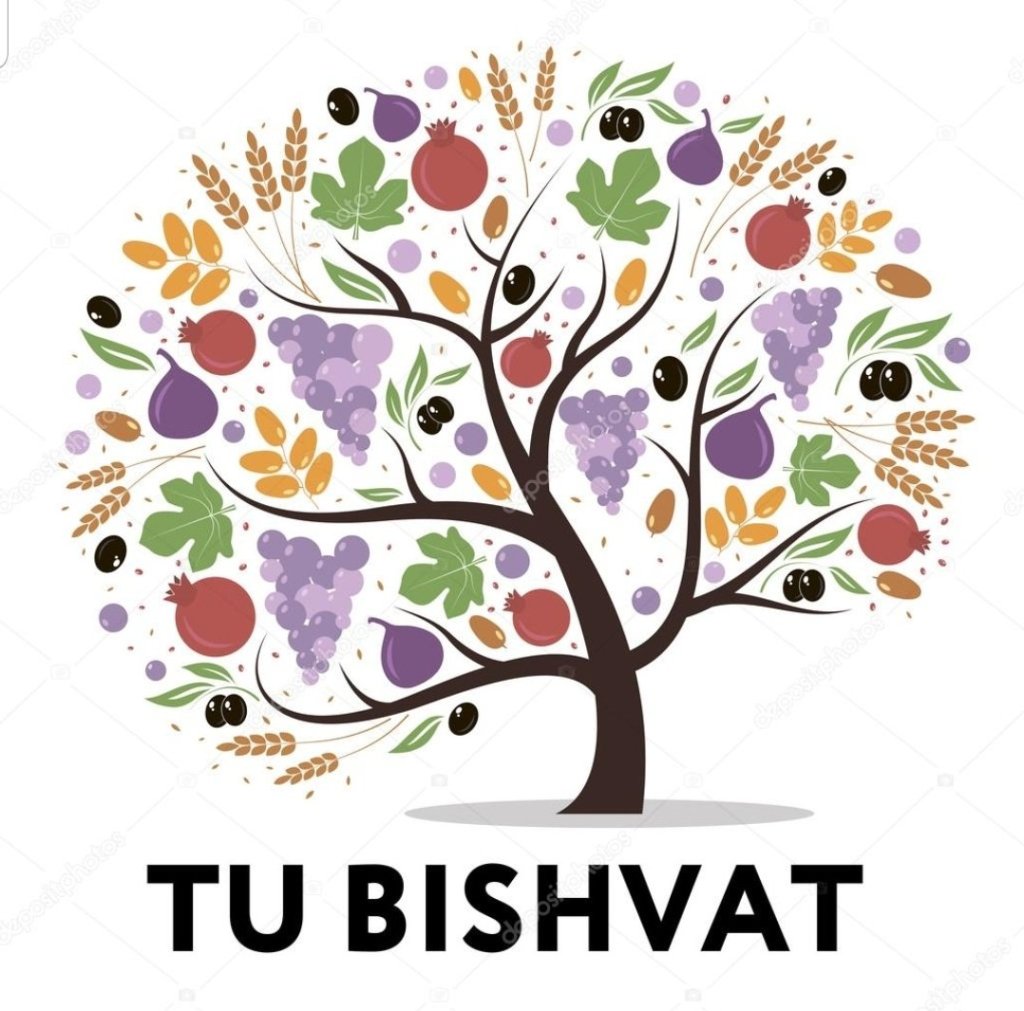
Content is available under CC BY-SA 3.0 unless otherwise noted. Terms of UsePrivacyDesktop From wikipedia- “Tu BiShvat (Hebrew: ט״ו בשבט; tú bish’vat) is a Jewish holiday occurring on the 15th day of the Hebrew month of Shevat (in 2020, Tu BiShvat begins at sunset on February 9 and ends in the evening of February 10). It is also called Rosh HaShanah La’Ilanot (Hebrew: ראש השנה לאילנות), literally ‘New Year of the Trees’. In contemporary Israel, the day is celebrated as an ecological awareness day, and trees are planted in celebration.” JCS: Although we don’t celebrate Talmudic customs, it’s an astute idea for calculating when trees are planted and when their fruit can be eaten according to the Biblical timeframe. I am not sure why one waits three years, but if God says it there must be a good reason for it. Some sources say the date begins not on Tu B’shvat but on Rosh Hashanah. Wikipedia continues, “The rabbis ruled in favor of Hillel on this issue and the 15th of Shevat became the date for calculating the beginning of the agricultural cycle for the purpose of biblical tithes. Biblical tithes Orlah refers to a biblical prohibition (Leviticus 19:23) on eating the fruit of trees produced during the first three years after they are planted. Neta Reva’i refers to the biblical commandment (Leviticus 19:24) to bring fourth-year fruit crops to Jerusalem as a tithe. Maaser Sheni was a tithe which was collected in Jerusalem and Maaser Ani was a tithe given to the poor (Deuteronomy 14:22–29) that were also calculated by whether the fruit ripened before or after Tu BiShvat. Of the talmudic requirements for fruit trees which used Tu BiShvat as the cut-off date in the Hebrew calendar for calculating the age of a fruit-bearing tree, Orlah remains to this day in essentially the same form it had in talmudic times. In the Orthodox Jewish world, these practices are still observed today as part of Halacha, Jewish law. Fruit that ripened on a three-year-old tree before Tu BiShvat is considered orlah and is forbidden to eat, while fruit ripening on or after Tu BiShvat of the tree’s third year is permitted. In the 1st, 2nd, 4th and 5th years of the Shmita cycle Maaser Sheni is observed today by a ceremony redeeming tithing obligations with a coin; in the 3rd and 6th years, Maaser Ani is substituted, and no coin is needed for redeeming it. Tu BiShvat is the cut-off date for determining to which year the tithes belong.”
Here’s a few quotes to meditate on about trees.
“Even if I knew that tomorrow the world would go to pieces, I would still plant my apple tree.” Martin Luther
“For in the true nature of things, if we rightly consider, every green tree is far more glorious than if it were made of gold and silver.” Martin Luther
“God has cared for these trees, saved them from drought, disease, avalanches, and a thousand tempests and floods. But he cannot save them from fools.” ~John Muir
“Only when the last tree has died and the last river been poisoned and the last fish been caught will we realize we cannot eat money.” ~Cree Indian Proverb
 Exploring God's Library